If you have a topic or question you would like to discuss, please feel free to reach out. I would be delighted to hear from you: salam@abasnur.com
The Blessing You May Be Blocking: A Story About Halal Income

Sometimes, the problem we are trying to solve is not where we think it is.
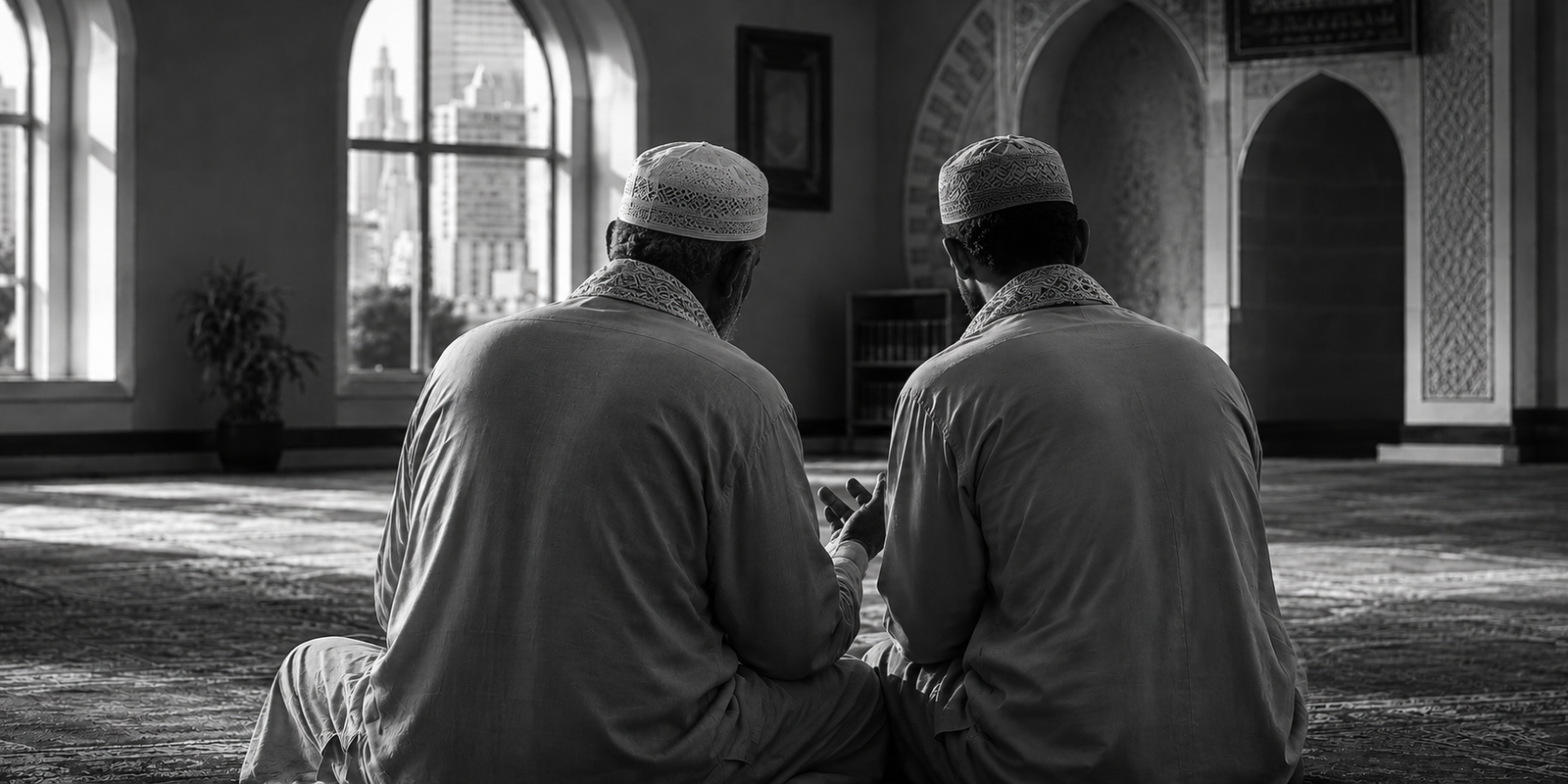
A few months ago, after the Fajr prayer at a mosque in London, a Somali father whom I had known for some time approached me with a request.
We often prayed in the same mosque, and over time, we had developed a good relationship. He would sometimes call me son and remind me how pleased he was to see a young man committed to attending the mosque regularly. May Allah protect the uncle!
One morning, he asked me a question I will never forget.
“Son, would you mind giving me twenty minutes of your time after Fajr? There is something I would like to discuss with you.”
“Of course, Uncle,” I replied.
I had no idea that our conversation would leave such a lasting impression on me.
A Father Who Had Lost Hope
We sat down, and he began telling me about his family.
He had two sons, and for several years, he had watched them drift away from the life he had hoped they would lead.
They had stopped praying regularly. They were no longer coming home as they once did, and they had become involved in drugs and other destructive behaviors. Their education and employment had also suffered.
He had tried everything he knew.
He had spoken to them repeatedly, pleaded with them, and even cried while asking them to change their ways. Each time, they promised they would stop, but the situation continued.
This had been going on for approximately eight or nine years.
He looked at me and said:
“Son, you are around the same age as my children. I see you coming to the mosque and trying to live a good life. What can I do? How can I bring my children back to Islam and help them leave the life they are living?”
I could hear the pain in his voice. This was a father who loved his children and desperately wanted to see them doing well.
I listened carefully. Rather than immediately offering advice, I began asking him questions.
I wanted to understand his family situation, what had changed over the years, and whether there were circumstances he had not yet considered.
I asked about his relationship with his children, their upbringing, and the challenges the family had experienced.
Eventually, I reached the question I had been holding back.
It was a sensitive question, and I deliberately left it until the end.
The Question He Had Not Expected
“Uncle, may I ask you one final question?”
“Of course, son,” he replied.
I took a moment before asking.
“Is there any income entering your household that you know you are not entitled to?”
He looked at me, unsure what I meant.
So I explained.
“For example, are you or your wife receiving government benefits while withholding information about your employment or income that you are required to report?”
He paused.
Then he admitted that this was precisely what had been happening.
He explained that his family had been receiving benefits for years while failing to disclose relevant income. Although they had stopped doing so a couple months ago at the time we were speaking, the practice had continued for a long time.
I asked him another question.
“Uncle, is that money part of what you have been using to support your family?”
He confirmed that it was.
At that moment, I shared my concern with him.
“Uncle, we have been talking about your children for the past twenty minutes, but have we considered what is happening within our own household?”
I explained that, as Muslims, we must take the source of our income seriously. Providing for our families is a responsibility, but so is ensuring that we earn and spend our money in a lawful and honest manner.
I reminded him that we cannot knowingly conceal income to obtain benefits we are not entitled to and then expect to ignore the consequences of our actions.
I was not claiming to know the unseen or to know precisely why his family was experiencing these difficulties. Only Allah knows that.
However, I encouraged him to take an honest look at his circumstances and begin correcting what he knew was wrong.
A Decision to Put Things Right
I advised him to seek guidance from a knowledgeable and trustworthy scholar regarding the religious implications of his situation. He also needed to contact the relevant authorities, correct the information he had provided, and resolve any improperly claimed benefits through the proper channels.
We discussed the importance of sincere repentance, seeking Allah’s forgiveness, maintaining the five daily prayers, and making du’a for his children.
I encouraged him to wake up before Fajr whenever possible and ask Allah to guide his family, while continuing to advise his children with patience, wisdom, and compassion.
We also discussed the money and possessions acquired through the improperly claimed benefits. I encouraged him to seek qualified religious advice on how to deal with the past financial wrongdoing rather than making assumptions about what should be given away.
What mattered most was that he recognised the seriousness of the situation and committed himself to putting things right.
He listened carefully.
And then he acted.
Two or Three Months Later
A couple of months passed before I heard more about his family.
When we spoke again, he shared some wonderful news.
His children had begun turning their lives around. They were returning to the mosque, moving away from their previous destructive behaviors, and rebuilding their daily routines.
The change brought him enormous happiness. Subhanallah.
The father who had once approached me in distress was now sharing news that had given him renewed hope.
Alhamdulillah, I was genuinely pleased for him.
I cannot claim to know exactly what brought about the change in his children’s lives. Guidance belongs to Allah, and every family has its own circumstances. Nor should anyone assume that every family struggling with similar problems has the same underlying cause.
But I will never forget the lesson I took from that conversation.
Sometimes, while desperately searching for a solution to a problem, we must also examine our own actions and responsibilities.
We must be willing to correct ourselves before demanding change from others.
Halal Income Is More Than a Financial Matter
As Muslims, we should never underestimate the importance of earning a lawful income.
Our income affects how we provide for our families, how we fulfil our responsibilities, and how we approach our relationship with Allah.
Honesty in earning and spending is not optional. We must not knowingly take what does not belong to us, conceal information to obtain money unlawfully, or justify dishonesty simply because it benefits our household.
At the same time, we should be careful not to assume that financial hardship, illness, or difficulties with our children are necessarily punishments for a particular sin. We do not know the unseen, and we should never claim certainty about Allah’s reasons for an individual’s circumstances.
What we can do is examine our own conduct, repent sincerely when we have done wrong, correct the harm we have caused, and place our trust in Allah.
Do Not Underestimate Barakah
Barakah is not simply about how much money we have in our bank accounts. It is about goodness, contentment, and benefit in what Allah has provided. A person may have a modest income yet find that it is sufficient for their needs. Another may earn considerably more but struggle to find peace and contentment.
We cannot measure barakah by money alone, nor can we guarantee that correcting our finances will immediately resolve every difficulty. But we can strive to earn lawfully, fulfil our obligations, and seek Allah’s blessings in what we have.
If your income is modest, do not be ashamed of it. Earn honestly, manage it wisely, and trust Allah.
If you have been involved in financial wrongdoing, do not despair of His mercy. Take responsibility, correct what you can, seek forgiveness, and make a sincere effort not to return to it.
A reminder to myself and to you.
I share this story with the permission of the uncle involved, without revealing his identity. My intention is not to judge him or his family, but to share a lesson that has stayed with me.
Before we ask why our children are struggling, why our homes lack peace, or why our lives seem so difficult, we should also have the courage to examine our own actions.
- Are we fulfilling our responsibilities?
- Are we earning our money honestly?
- Are we treating others fairly?
- Are we asking Allah for forgiveness while continuing to do things we know are wrong?
These are difficult questions, but sometimes they are exactly the questions we need to ask ourselves.
Make your income halal. Fulfil your obligations. Correct your mistakes. Raise your children with love, good character, and Islamic values. Keep making du’a, even when the situation seems hopeless. And remember that guidance belongs to Allah alone.
May Allah grant us halal provision, place barakah in our wealth and families, forgive our shortcomings, and guide our children to what pleases Him. Ameen.